Aqui em baixo está o trailer da nova BD de Paul Caggegi, feita com GIMP e Blender.
Showing posts with label blender. Show all posts
Showing posts with label blender. Show all posts
Friday, 17 January 2014

Wednesday, 18 December 2013
BuildBot + GraphicAll
"Warning: these builds are not as stable as releases, use at your own risk."
http://builder.blender.org/download/
http://www.graphicall.org
http://builder.blender.org/download/
http://www.graphicall.org
Blender Domain
This is a Wiki devoted to the Blender Universe. It's different from previous existing wikis because our aim is to bring together all Blender-related information. This wiki is not about the Blender software features or for Blender learning. We want to create a wiki where you can easily find out about the Blender movies, studios, artists, scripts, etc.
This Wiki has no commercial purpose or aim and has no affiliation whatsoever with the Blender Foundation or Blender Institute. This is a project "from blenderheads to blenderheads".
http://www.blenderdomain.org
This Wiki has no commercial purpose or aim and has no affiliation whatsoever with the Blender Foundation or Blender Institute. This is a project "from blenderheads to blenderheads".
http://www.blenderdomain.org
Monday, 9 December 2013
[Announcement] Blender & Libre Animation: freedom is happening here — Lecture | Monday, 16/12
Na próxima segunda-feira, a aula decorrerá no auditório do Pavilhão Sul às 10:00 AM, onde assistiremos à seguinte palestra/aula aberta. Esta aula deverá contar com a presença das duas turmas.
Palestra
Blender & Animação Livre: a liberdade está a passar por aqui
Data
Segunda-feira, 16/12/2013, às 10:00 AM.
Local
PS01 (Auditório, Pavilhão Sul), FBAUP.
Sinopse
Vivemos tempos extraordinários. "A Internet é o tecido das nossas vidas" (Castells, 2001) e está a mudar o nosso modo de viver, aprender, trabalhar, criar. Uma das mudanças mais importantes e notáveis é uma nova cultura de partilha promovida pelas redes interligadas de computadores e seres humanos. Vivemos realmente tempos extraordinários, o nascimento dos recursos digitais comuns (digital commons). Mas estes tempos não surgem sem custos e lutas. Existem perigos e riscos à espreita que se alimentam de conformismo, ignorância e preguiça.
Software proprietário, patentes de software e leis de direitos de autor excessivamente restritivas atuam como sistemas de controle e propriedade e impõem uma "cultura da permissão" (Lessig, 2004) que se esforça por obnubilar o mundo moldado pela economia da colaboração em massa, a economia da informação em rede (Benkler, 2006).
Em alternativa, Software Livre e Cultura Livre são o resultado natural de uma escolha ética em direção a uma sociedade e cultura baseadas na livre troca de ideias e criatividade, na liberdade e na partilha. São uma declaração sobre o mundo em que vivemos e a expressão de uma escolha sobre como nele queremos viver e trabalhar. Representam um ecossistema de criatividade que recusa o domínio de barreiras artificiais que beneficiam apenas alguns.
Durante esta sessão, serão apresentados exemplos para ilustrar as nossas ideias e analisados casos reais demonstrativos da viabilidade das ferramentas libre num ambiente de produção e os benefícios que acompanham a partilha e a utilização de licenças mais abertas. Iremos apresentar o Software Livre e Cultura Livre enquanto escolhas éticas e opções válidas para a animação e todas as artes em geral.
Neste contexto, o Blender emerge como um caso com interesse exemplar. A comunidade de programadores, artistas e utilizadores em geral, reunida em torno deste Software Livre desenvolvido em modelo aberto, constitui uma rede de atores com diferentes graus de compromisso e envolvimento, com diferentes motivações e interesses. Esta diversidade nas intervenções e participações sustenta um quotidiano rico e fértil que assumiu já um protagonismo incontornável no contexto da Cultura Livre.
Biografia do Orador
Nelson Gonçalves é docente no Departamento de Comunicação e Arte da Escola Superior de Educação do Instituto Politécnico de Viseu, desde 2003. É professor de diversas disciplinas, incluindo Tecnologia Educativa e Animação Multimédia. Atualmente presidente da Associação Ensino Livre, uma organização portuguesa sem fins lucrativos dedicada à promoção do Software Livre e conteúdos abertos na educação, é também membro fundador do OpenLab ESEV e do AnimaXion Studioz, um coletivo independente de animação dedicado à exploração de Software Livre e Open Source para animação. http://nafergo.intervir.net
— — — — — — — — — — — — — — — — —
Next monday, the class will take place at the South Pavilion's Auditorium at 10:00 AM, where we will attend the following lecture. This lesson will rely on the attendance of both classes.
Lecture
Blender & Libre Animation: freedom is happening here
Date
Monday, 16/12/2013, at 10:00 AM.
Venue
PS01 (Auditorium, South Pavilion), FBAUP.
Synopsis
We live in remarkable times. "The Internet is the fabric of our lives" (Castells, 2001) and is changing the way we live, learn, work, create. One of the most important and remarkable changes is a new culture of sharing fostered by the interconnected networks of computers and humans. We are truly living in remarkable times, the birth of the digital commons. But these times don't arise without costs and struggles. Perils and dangers lurk around and feed on ignorance, conformism and idleness.
Proprietary software, software patents and overly-restrictive copyright laws act as systems of control and property and enforce a “culture of permission” (Lessig, 2004) that obnubilates the world being shaped by the economics of mass collaboration, the networked information economy (Benkler, 2006).
Alternatively, Free Software and Free Culture are the natural result of an ethical choice towards a society and culture based on the free exchange of ideas and creativity, on freedom and sharing. They are a statement about the world we live in and the expression of a choice about how we want to live and work in it. They stand for an ecosystem of creativity that refuses the domination of the artificial barriers that benefit only a few.
During this session, we will present examples to illustrate our points and discuss real cases to demonstrate the viability of libre tools in a production environment and the benefits that accompany sharing and the use of more open licenses. We will argue for Free Software and Free Culture as an ethical and valid choice for animation and all arts in general.
In this context, Blender emerges as a case of particular interest. The community of programmers, artists and users in general gathered around this Free Software developed in an Open Source model is a network of actors with varying degrees of commitment and involvement, with different motivations and interests. This diversity of interventions and participation sustains a rich and fertile everyday life that already assumes an essential role in the context of Free Culture.
Lecturer’s Biography
Nelson Gonçalves is a teacher at the Department of Communication and Art at the School of Education of the Polytechnic Institute of Viseu, since 2003. He teaches several courses including Educational Technology and Multimedia Animation. Currently the president of Associação Ensino Livre (Free Teaching Association), a portuguese not-for-profit devoted to the promotion of Free/Libre Software and open contents in education, he's also a founding member of OpenLab ESEV and AnimaXion Studioz, an independent animation collective devoted to the exploration of Free/Libre and Open Source Software for animation. http://nafergo.intervir.net
Palestra
Blender & Animação Livre: a liberdade está a passar por aqui
Data
Segunda-feira, 16/12/2013, às 10:00 AM.
Local
PS01 (Auditório, Pavilhão Sul), FBAUP.
Sinopse
Vivemos tempos extraordinários. "A Internet é o tecido das nossas vidas" (Castells, 2001) e está a mudar o nosso modo de viver, aprender, trabalhar, criar. Uma das mudanças mais importantes e notáveis é uma nova cultura de partilha promovida pelas redes interligadas de computadores e seres humanos. Vivemos realmente tempos extraordinários, o nascimento dos recursos digitais comuns (digital commons). Mas estes tempos não surgem sem custos e lutas. Existem perigos e riscos à espreita que se alimentam de conformismo, ignorância e preguiça.
Software proprietário, patentes de software e leis de direitos de autor excessivamente restritivas atuam como sistemas de controle e propriedade e impõem uma "cultura da permissão" (Lessig, 2004) que se esforça por obnubilar o mundo moldado pela economia da colaboração em massa, a economia da informação em rede (Benkler, 2006).
Em alternativa, Software Livre e Cultura Livre são o resultado natural de uma escolha ética em direção a uma sociedade e cultura baseadas na livre troca de ideias e criatividade, na liberdade e na partilha. São uma declaração sobre o mundo em que vivemos e a expressão de uma escolha sobre como nele queremos viver e trabalhar. Representam um ecossistema de criatividade que recusa o domínio de barreiras artificiais que beneficiam apenas alguns.
Durante esta sessão, serão apresentados exemplos para ilustrar as nossas ideias e analisados casos reais demonstrativos da viabilidade das ferramentas libre num ambiente de produção e os benefícios que acompanham a partilha e a utilização de licenças mais abertas. Iremos apresentar o Software Livre e Cultura Livre enquanto escolhas éticas e opções válidas para a animação e todas as artes em geral.
Neste contexto, o Blender emerge como um caso com interesse exemplar. A comunidade de programadores, artistas e utilizadores em geral, reunida em torno deste Software Livre desenvolvido em modelo aberto, constitui uma rede de atores com diferentes graus de compromisso e envolvimento, com diferentes motivações e interesses. Esta diversidade nas intervenções e participações sustenta um quotidiano rico e fértil que assumiu já um protagonismo incontornável no contexto da Cultura Livre.
Biografia do Orador
Nelson Gonçalves é docente no Departamento de Comunicação e Arte da Escola Superior de Educação do Instituto Politécnico de Viseu, desde 2003. É professor de diversas disciplinas, incluindo Tecnologia Educativa e Animação Multimédia. Atualmente presidente da Associação Ensino Livre, uma organização portuguesa sem fins lucrativos dedicada à promoção do Software Livre e conteúdos abertos na educação, é também membro fundador do OpenLab ESEV e do AnimaXion Studioz, um coletivo independente de animação dedicado à exploração de Software Livre e Open Source para animação. http://nafergo.intervir.net
— — — — — — — — — — — — — — — — —
Next monday, the class will take place at the South Pavilion's Auditorium at 10:00 AM, where we will attend the following lecture. This lesson will rely on the attendance of both classes.
Lecture
Blender & Libre Animation: freedom is happening here
Date
Monday, 16/12/2013, at 10:00 AM.
Venue
PS01 (Auditorium, South Pavilion), FBAUP.
Synopsis
We live in remarkable times. "The Internet is the fabric of our lives" (Castells, 2001) and is changing the way we live, learn, work, create. One of the most important and remarkable changes is a new culture of sharing fostered by the interconnected networks of computers and humans. We are truly living in remarkable times, the birth of the digital commons. But these times don't arise without costs and struggles. Perils and dangers lurk around and feed on ignorance, conformism and idleness.
Proprietary software, software patents and overly-restrictive copyright laws act as systems of control and property and enforce a “culture of permission” (Lessig, 2004) that obnubilates the world being shaped by the economics of mass collaboration, the networked information economy (Benkler, 2006).
Alternatively, Free Software and Free Culture are the natural result of an ethical choice towards a society and culture based on the free exchange of ideas and creativity, on freedom and sharing. They are a statement about the world we live in and the expression of a choice about how we want to live and work in it. They stand for an ecosystem of creativity that refuses the domination of the artificial barriers that benefit only a few.
During this session, we will present examples to illustrate our points and discuss real cases to demonstrate the viability of libre tools in a production environment and the benefits that accompany sharing and the use of more open licenses. We will argue for Free Software and Free Culture as an ethical and valid choice for animation and all arts in general.
In this context, Blender emerges as a case of particular interest. The community of programmers, artists and users in general gathered around this Free Software developed in an Open Source model is a network of actors with varying degrees of commitment and involvement, with different motivations and interests. This diversity of interventions and participation sustains a rich and fertile everyday life that already assumes an essential role in the context of Free Culture.
Lecturer’s Biography
Nelson Gonçalves is a teacher at the Department of Communication and Art at the School of Education of the Polytechnic Institute of Viseu, since 2003. He teaches several courses including Educational Technology and Multimedia Animation. Currently the president of Associação Ensino Livre (Free Teaching Association), a portuguese not-for-profit devoted to the promotion of Free/Libre Software and open contents in education, he's also a founding member of OpenLab ESEV and AnimaXion Studioz, an independent animation collective devoted to the exploration of Free/Libre and Open Source Software for animation. http://nafergo.intervir.net
Saturday, 7 December 2013
Experiment in Audio Driven Animation by Todd McIntosh
WARNING: THIS IS NOT A TAYLOR PUBLICITY THING
(it's a cover of Walk Off The Earth actually)
missing you goat <3
Used the "Bake Audio to F-Curves" feature to import the audio for the video. Audio was imported in 12 groups of frequency bands (0-120Hz, 120-250Hz, 250-500Hz, etc), and was used to drive the extension of the hex bars which were grouped randomly around the sphere. The audio sync was not as great as I had hoped, and think in part due to the way I'm using frequency bands as drivers. Next time I would probably opt to use a multitrack recording and assign separate instruments/voices as the driver groups. That would probably read better as far as distinct groups in the animation.
Music Credit: "I Knew You Were Trouble" by Walk Off The Earth
(it's a cover of Walk Off The Earth actually)
missing you goat <3
Used the "Bake Audio to F-Curves" feature to import the audio for the video. Audio was imported in 12 groups of frequency bands (0-120Hz, 120-250Hz, 250-500Hz, etc), and was used to drive the extension of the hex bars which were grouped randomly around the sphere. The audio sync was not as great as I had hoped, and think in part due to the way I'm using frequency bands as drivers. Next time I would probably opt to use a multitrack recording and assign separate instruments/voices as the driver groups. That would probably read better as far as distinct groups in the animation.
Music Credit: "I Knew You Were Trouble" by Walk Off The Earth
Sunday, 1 December 2013
Monday, 25 November 2013
OMEGA - nameless (?) planet
OMEGA - TEASER TRAILER from Andy Goralczyk on Vimeo.
http://www.artificial3d.com/omega/
The nameless planet. A never-ending wasteland dominated by bizarre trash formations, dust and rock. But this desert of junk and toxic waste is not lifeless at all. Out of the scattered remains of a long forgotten culture crawl the most curious metallic creatures.
OMEGA is a highly ambitious stop motion short movie project produced by Eva Franz and Andy Goralczyk together with a group of highly talented students at the university of arts and design in Karlsruhe, Germany. Sound design is done by Lorenz Schwarz.
___
ndy Goralczyk used a unique combination of stop motion and CG, to pull us into this post apocolyptic world of robots and trash formations. Omega is still a work in progress, but you can follow the progress on his blog here.
Monday, 11 November 2013
Stereoscopic Rendering

How to implement an off-axis camera to produce correct stereo pairs via Python Add-on in Blender
Since there is no stereoscopic camera in Blender, I decided to write a python script to implement an 'Off-Axis' stereo camera. This script sets the 'Stereo Window' or zero parallax in Blender and not via postproduction. It creates a parallel off-axis camera rig, the best way to produce stereo pairs without vertical parallax. You can use Blenders Node Editor to control the left and right camera render results and combine them to a Side-by-Side, Interlaced or Anaglyph image.http://www.noeol.de/s3d/
Saturday, 9 November 2013


Tuesday, 5 November 2013

Thursday, 31 October 2013
Sunday, 27 October 2013
Old Black video
Old Black -- Egyptrixx feat. Ohbijou from A N F on Vimeo.
http://anf.nu/old-black/
Old Black is Egyprixx´ remake of the song of the same title by the drone doom band Earth. David Psutka had already commissioned me with the video Start from the Beginning for Egyptrixx last year and he commissioned another one this year. Even though "Old Black" and "Start from the Beginning" are completely different songs, I tried to stick to a similar concept and develop a bleak artifical world, which is influenced by the soundcsape. Starting out I had designed a lot more symbols and scenes, but David urged me to keep it as minimal and simple as possible.
The graphic elements are a mixture of 3d-renderings and flat 2d textures aligned in space. The video makes heavy use of particles and simulations and was made with the open source 3d software http://blender.org with After Effects used for particle and compositing work. Randomness finds its way into my work often and I appreciate the element of not having complete control over the outcome of a scene.
The video was made in a timeframe of about 3 weeks total, with render and simulation times well over 6 weeks spread out on several workstations.
Thursday, 24 October 2013
[Announcement] Blender workshop update
The location for my Blender workshop at Future Places 2013 has been updated: PhDDesign studio, UPTEC PINC (Praça Coronel Pacheco, 2 4050-453 Porto).
View Larger Map
Check it out at http://futureplaces.org/labs/games-to-the-people/ and be sure to attend!
View Larger Map
Check it out at http://futureplaces.org/labs/games-to-the-people/ and be sure to attend!
SNIFF
interactive dog that follows you around, discerns your gestures as friendly or aggressive and tries to engage you in a play. built with openFrameworks, unity3d and blender3d. more about: www.gravitytrap.com/sniff
Wednesday, 23 October 2013
Sunday, 20 October 2013
Equateur | music video
Music video for Equateur's new song Aquila.
Get the song here : http://bit.ly/XQlYC4
www.facebook.com/EquateurOfficial
www.soundcloud.com/Equateur
https://twitter.com/Equateur0
Directed by Luca Stefanini & Kadavre Exquis
http://kadavrexquis.com/
https://www.facebook.com/Kadavrexquis
Making-of : http://kadavrexquis.com/Aquila-making-of
Produced by La Falcone / Raphaël Gribinski
Cinematography by Hugo Cohen assisted by Rafael Ichou
Edited by Théo Stefanini
thanks to Franck Caron, Caroline Tillette, Tom-David, Odile Lavie, Sylvain & Sandrine W. ,Home Studio - KOKON TOZAI
© 2013 Nouvelle New Wave - All right reserved
Wednesday, 16 October 2013
[ANNOUNCEMENT] Blender workshop at Future Places 2013, 29 Oct, 2—6PM

Check it out at http://futureplaces.org/labs/games-to-the-people/ and be sure to attend!
The goal of this workshop is to initiate the participants in 3D and game development using Blender (blender.org) — a free and open source software for 3D computer graphics. Its embed game engine easily allows users to prototype video games and other interactive 3D digital environments, due to an accessible visual programming interface.
In the first part of the workshop, the participants will be instructed to recreate a classic video game, and in the second they will create an alternative and functional version of the game, applying the newly acquired skills and by further exploring the software.
Contents: Introduction to the Blender interface; Introduction to the Blender Game Engine; Physics and Materials.
Length: 4 hours.
Number of participants: 10 to 20.
Participants should bring: Their own laptop (Mac, Windows, or Linux) with Blender 2.68 (or later) previously installed. A three-button mouse.
Schedule: 29 Oct, 2 – 6PM.
Location: PhDDesign studio, UPTEC PINC.
Thursday, 10 October 2013
Blender 2.69 (release candidate) is out!
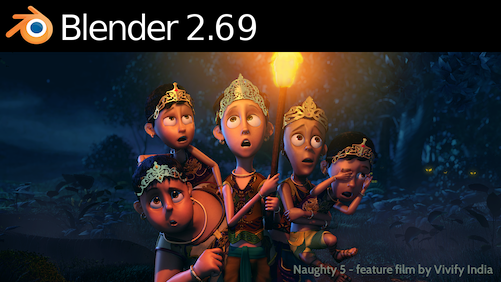
Blender 2.69 (release candidate) is out!
Check the release log at http://www.blender.org/development/release-logs/blender-269/.
Tuesday, 8 October 2013
Subscribe to:
Posts (Atom)